
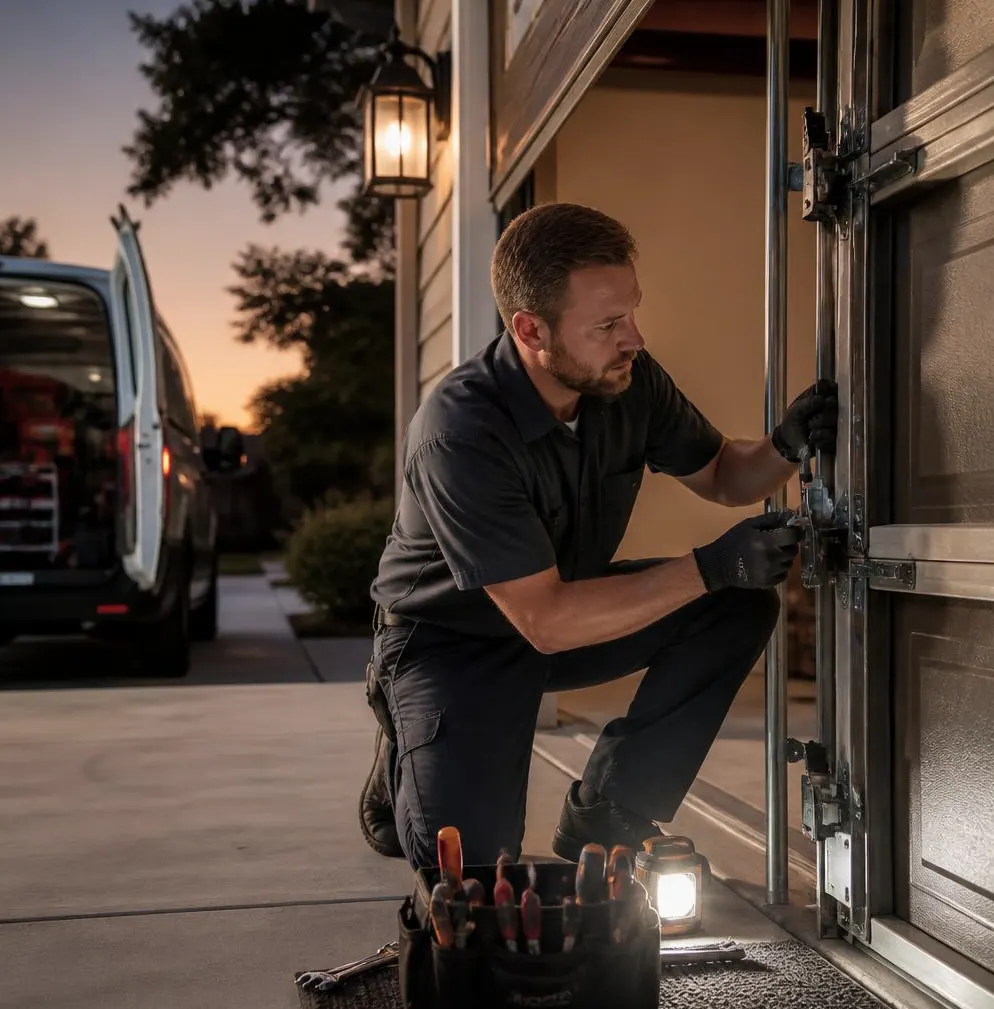
What a Technician Sees on This Kind of Call
The pattern is almost always the same. Someone noticed the garage door had gotten heavy to lift, or heard a loud bang from the garage overnight, and decided to handle the spring themselves over a weekend. By the time we get the call, there's a bent winding bar on the floor, a door that's crashed down onto the track, and sometimes a trip to urgent care already behind them. We've seen fingers caught in unwinding cones, a cracked windshield from a spring segment that let go mid-adjustment, and more than one door that came off its tracks entirely and landed on a car bumper or a storage shelf.
None of this is because the homeowner was careless. Torsion springs just don't look as dangerous as they are, and that's exactly the problem.
Why This Specific Repair Is So Dangerous
A standard torsion spring sits above the garage door and is wound under extreme tension to counterbalance the weight of the door, which can run anywhere from 150 to over 400 pounds depending on the material and whether it's insulated. That tension doesn't show. The spring looks like a coiled piece of metal sitting quietly on a shaft, but it's storing enough force to snap a winding bar out of a person's hands, send it spinning, or release all at once if the set screws are loosened at the wrong moment.
Extension springs, the kind mounted along the horizontal tracks on older doors, carry their own risk: if they're not fitted with a safety cable, a broken spring can fire a piece of metal across the garage like a projectile.
This is why the injuries tend to be serious rather than minor. We're talking about crushed fingers, broken hands, facial lacerations, and eye injuries from flying metal or sudden cable snap-back. A door that falls while someone is underneath it, reaching for a stuck panel or trying to re-engage the opener arm, can cause far worse. These aren't freak accidents. They're the predictable result of releasing stored mechanical energy without the right tools or technique.
How Local Weather Makes a Bad Situation Worse
Cold weather is a real factor here, not just a general warning. Once temperatures drop and stay down through winter, steel springs become more brittle and more prone to sudden failure rather than gradual stretching. A spring that's been slowly losing tension all summer and fall can let go abruptly on a cold morning instead of giving you the gradual warning signs you'd expect in warmer months.
Add in road salt and the ice-melt tracked in from driveways all winter, and you get another problem: corrosion. Moisture and salt residue settle on spring coils, cables, and the hardware holding brackets in place. Rust doesn't just look bad, it weakens metal unevenly, which means a corroded spring can fail at a lower stress point than a clean one rated for the same job. This is one of the reasons late fall is a smart time to have springs and cables checked, before the real cold sets in and before ice starts forming on the slider track and bottom seal.
Warning Signs That Mean It's Time to Stop and Call Someone
- The door feels noticeably heavier when you lift it manually with the opener disconnected. This usually means the spring has lost tension and is close to failing.
- Visible gaps in the coil or a spring that looks stretched compared to its resting shape.
- A loud bang from the garage, especially overnight or during a cold snap. This is almost always a spring breaking, even if the door still seems to operate using the opener's motor.
- The door won't stay open halfway on its own when disconnected from the opener. A balanced door should hold its position; if it drifts down, the spring is compensating poorly.
- Visible rust on the spring coils, cables, or end brackets, which signals corrosion that may not be obvious from a quick glance.
What Homeowners Can Safely Do
You can visually check for rust, listen for grinding or popping noises, and watch for a door that's slow to open or closes unevenly. You can also keep the track and rollers clean and lubricated, which reduces strain on the spring system overall. What you shouldn't do is touch the winding cones, remove the spring, or attempt to adjust tension. The tools for this, winding bars sized correctly for the shaft, vice grips to secure the bar, and the technique to wind in controlled quarter-turns, aren't things most garages have on hand, and getting the sequence wrong is what leads to the injuries described above.
When to Call Niles Garage Door Pro
If your door is showing any of the signs above, or if a spring has already broken and the door won't open, that's a call for us rather than a weekend project. We handle spring replacement on both torsion and extension systems, matching the new spring's wire size and wind direction to your door's exact weight so it's properly balanced, not just functional. We also offer garage door maintenance visits heading into winter, which cover spring tension, cable condition, rust spots, and track alignment before cold weather turns a minor issue into a stuck or dangerous door.
If you're in Niles, Warren, Girard, Howland, McDonald, Mineral Ridge, Lordstown, or Cortland and your garage door is heavy, noisy, or just not sitting right, call Niles Garage Door Pro. We'll come out, diagnose it properly, and get it fixed without anyone needing a trip to the ER.